


Your guide to fake news
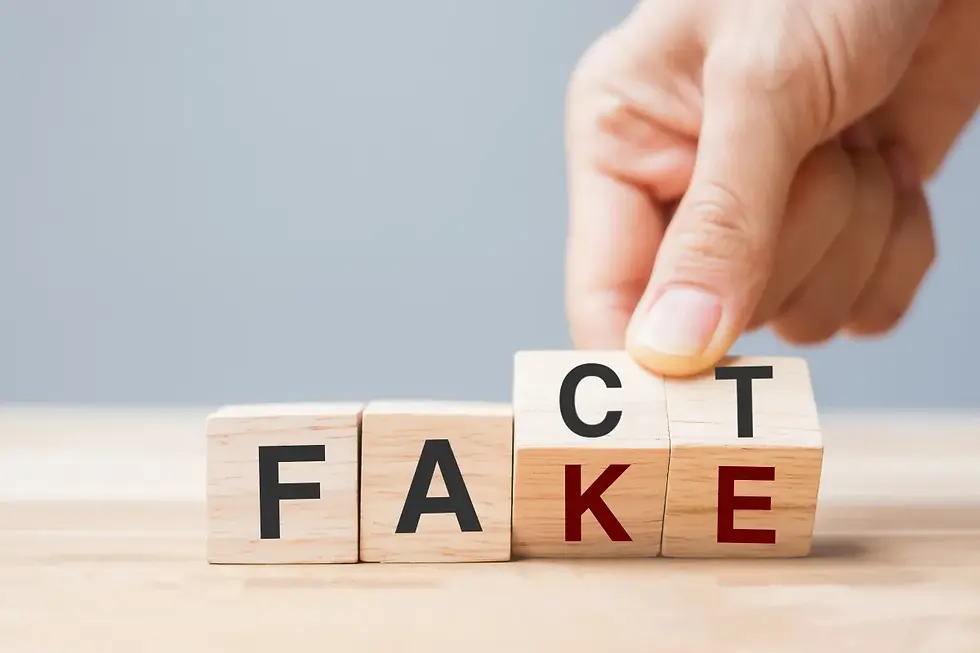
Source: EPThinkTank
What is fake news?
Where did you first hear the phrase “fake news?” I can take a guess, but first, let’s talk about that phrase's connotation.
Anthony Adornato points out in his book, Mobile and Social Media Journalism, that “fake news often means whatever ‘your side’ thinks it means.” Given this connotation, calling something “fake news” is an intense accusation. With the ever-polarizing and sensationalized media combined with the falling rates of media literacy, “fake news” has become a buzz phrase that has the power to instill anger and distrust in many news consumers.
Where is the line?
Fake news is defined in the book as “the deliberate fabrication of information with the intent to deceive.” In other words, fake news is information that is spread with the goal of misleading its consumers. The book provides other definitions as well, most of them are other iterations of the one I have just provided, but there is one that I would like to assess further.
“False stories that appear to be news, spread on the internet or using other media, usually created to influence political views or as a joke.” (Cambridge Dictionary)
Personally, I don’t really agree with this definition, but again, one must take low-media literacy rates into account. Like many of my journalist peers (at least the ones with a sense of humor), I follow The Onion on social media. If you aren’t familiar with the page, The Onion publishes satirical articles that resemble real news articles. Most of them are lighthearted, humorous and to many, I’m sure, obviously fake. Under this definition, they are considered fake news because they are “false stories that appear to be news, spread on the internet … as a joke.”
I’m sure many of The Onion’s readers wouldn’t identify this content with the “fake news” label that they know, but, to understand why this definition holds water, ask yourself if people who are unfamiliar with this type of content would be able to tell immediately that The Onion is satire. Would you label satirical news pieces as fake news? If not, where is the line between “real” and “fake” news in this context?
Are tech companies responsible for stopping the spread of misinformation and disinformation?
In a newsroom, “fake news” is known as “disinformation,” information spread with the intent to mislead. Keep in mind that this is different from misinformation, which is false information regardless of intent to mislead. Though misinformation is still problematic, this distinction is important given the connotation of the term “fake news.”
Much of both types of false information is spread on social media, which begs the question of whether it can be controlled by the tech companies that run social media platforms. Companies like Twitter and Facebook faced much controversy during the 2016 and 2020 elections given the increased amount of mis and disinformation spread on the sites. As a result, they’ve implemented features like fact-checking notices under posts that contain key politicized words like “COVID-19,” “vaccine,” or “election.” The platforms also allow users to flag content that they suspect to be false and Facebook has partnered with third-party fact checking organizations.
However, in my opinion, this isn’t enough. Algorithms on social media platforms dictate what content users will see, and this algorithm heavily depends on the amount of interaction different posts receive. The more a “fake news” story is clicked on, the more people it will reach. To make progress in stopping the spread of false information on social media, restructured algorithms are necessary.
Distrust in the media and what journalists should do
Journalists are often looked toward to combat the spread of fake news, despite trust in the media being at an all time low. One thing that journalists can do in an attempt to instill more faith in the media is to provide more transparency in their reporting process. With mis and disinformation spreading as rapidly as they do, sometimes even journalists can be fooled. When this happens, I’m sure you can imagine how it affects trust in the media. By offering more transparency to audiences, outlets can show newsroom norms like fact-checking and information verification.


Comments